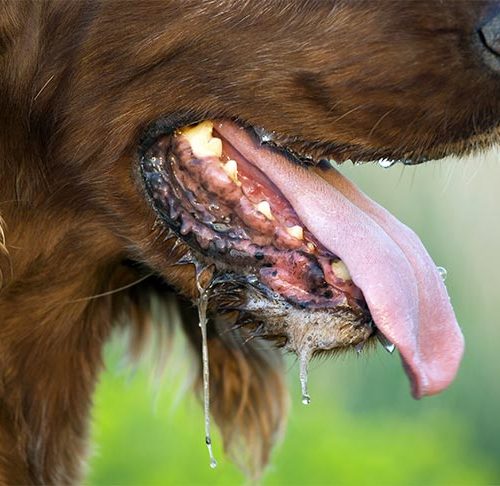
If you have been living with a dog for many years, there might have been a few occasions where your furry friend’s breath would have made a skunk shy. This could happen quite often if he is fond of foraging around spaces like garbage bins or parks where he can find dead rotting birds and tiny animals to chew on.
While bad breath lasting for 1- 2 days is not a big issue but if it is not going away even after 3 days and is only growing stronger, you should see if the pet is showing other abnormalities too like loss of appetite, fever, etc. and consider getting your dog checked by a vet. Read further into this article to find why your dog’s breath might smell like rotten flesh if it has not reduced even after 3-4 days.
Mainly there are three reasons behind your dog’s foul breath which is not showing any signs of receding.
- Due to gum problems
- Due to infection in stomach
- Due to liver problems
Bad breath is one of the earliest signs to show for these issues and can be easily controlled but if not treated timely can lead to more problems that can become a rather big issue later on.
One of the main and very basic reasons behind bad breath in pets is poor oral hygiene. Some early signs of gum disease in dogs may include bad breath, tartar (mineralized plaque) on the teeth, loss of interest in chewing, sudden weight loss, fussy eating, and a line of red inflammation along the gumline. Unfortunately, the first signs of periodontal disease in dogs are rarely observed by pet parents.
Treatment will depend upon how serious and advanced the disease is. Dog’s oral hygiene can be improved and regulated by regular teeth brushing using safe to ingest dog toothpaste and/or by using dental gels that fight bad breath and tartar and is easier to use for dogs who have never used a toothbrush before. Antibiotics can be used to fight tooth infection, particularly tooth abscesses which can occur due to Periodontal disease. Dogs with severe dental disease are often placed on antibiotics in the days leading up to and after a dental cleaning. However dental cleaning is a more serious procedure.
The second reason for bad breath can be related to stomach infection. Early signs of this are bad breath, excessive salivation, and reduced appetite. A prolonged infection might result in complete appetite loss too. So if your dog is eating way less than normal or not at all for more than 2 days, definitely get him checked. Furthermore, if with all the above-listed signs your dog is having a constant fever, there’s a strong chance it has a stomach infection. A dog’s normal body temperature is between 101 to 102.5 degrees Fahrenheit (38.3 to 39.2 degrees Celsius). Some pets maintain a baseline temperature a little above or below the average, but if your pet’s temperature rises above 104 degrees F or falls below 99 degrees F, take him to a veterinarian.
Stomach infection is easily treatable with orally ingestible antibiotics prescribed by the vet and if the infection has gone severe, antibiotic shots combined with IV drips and oral medication are generally opted to get a rapid control over it.
The Third reason for bad breath can be liver issues. It’s easy to miss symptoms of liver disease as they are similar to other ailments. These symptoms may include vomiting, increased urination, loss of appetite, blood in its pee or poop, increased thirst, etc. Sometimes the liver disease can happen as a result of aging. Sometimes it’s genetic. some medicines can also put the liver under stress. Other causes of liver disease may include some plants and herbs such as ragwort, certain mushrooms, mold on corn, etc.
Treatment will again depend upon how soon the problem is caught and what caused it. Diet changes often help. Your dog may need a special diet to make sure he’s getting the nutrients and calories needed to help his liver. Supplements such as SAM-E or milk thistle may help the liver recover. Antibiotics are used for infections of the liver. You may also need to change your dog’s other medications or reduce how much he takes. Surgery may be an option for dogs with tumors or cysts.
Our dogs cannot speak but most of their ailments show plainly if we only. take time to notice the subtle changes in them. A little bit of attention and a timely visit to the vet can prevent a small ailment to become something serious and painful. Awareness is always the key.

 Loud Thoughts