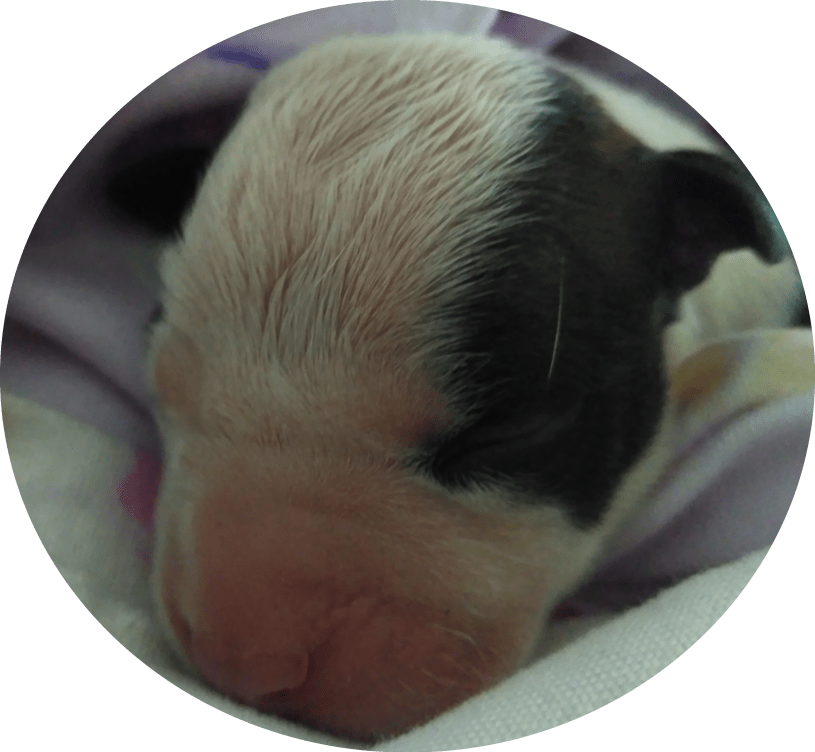
Probably the worst nightmare for any dog owner is to get to hear that their pet has contracted distemper. Distemper and Parvo are two such diseases that have no cure yet, just preventive methods. When and If contracted, supportive care is the only option. It is a lethal disease in dogs, a disease that cost me not only my 4-year-old dog but even her litter of 5 and it went unnoticed and mistaken even by the vet for stomach infection and kennel cough until it reached a critical stage of no return.
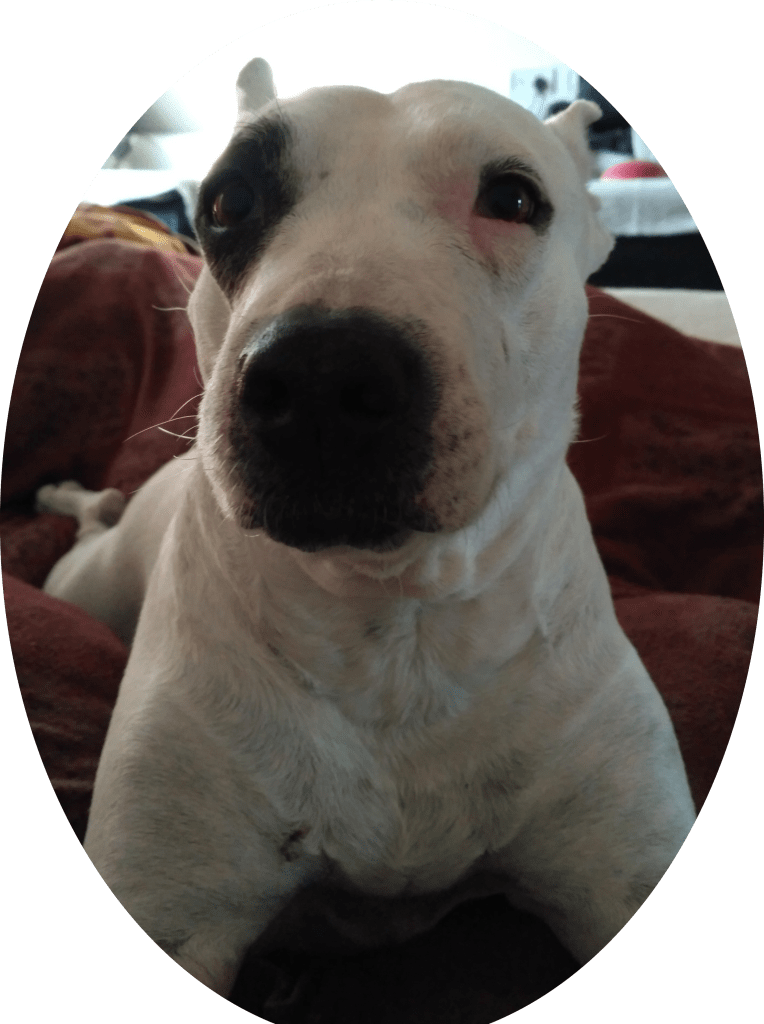
This is Pepper in the picture, my now dead bull terrier. She was my sweetheart, and even my parent’s favorite among the 3 adult dogs and to be the favorite of the parents in the house is something alright. She was three and a half months old when we brought her home while she was healing from Parvo and grew into a beautiful, strong dog. Her mother was a trained fighter so Pepper had that certain violent streak in her blood but she controlled it really well and used it only on dangerous things like snakes and monitor lizards that are usually spotted near our house. She had just turned 4 years old when we decided to have her litter so we proceeded with it. We wanted puppies that will be the lovely little replicas of their mom and so they were. Little cuties since day one. especially the females, they were just like their mom…active, alert, and fierce.
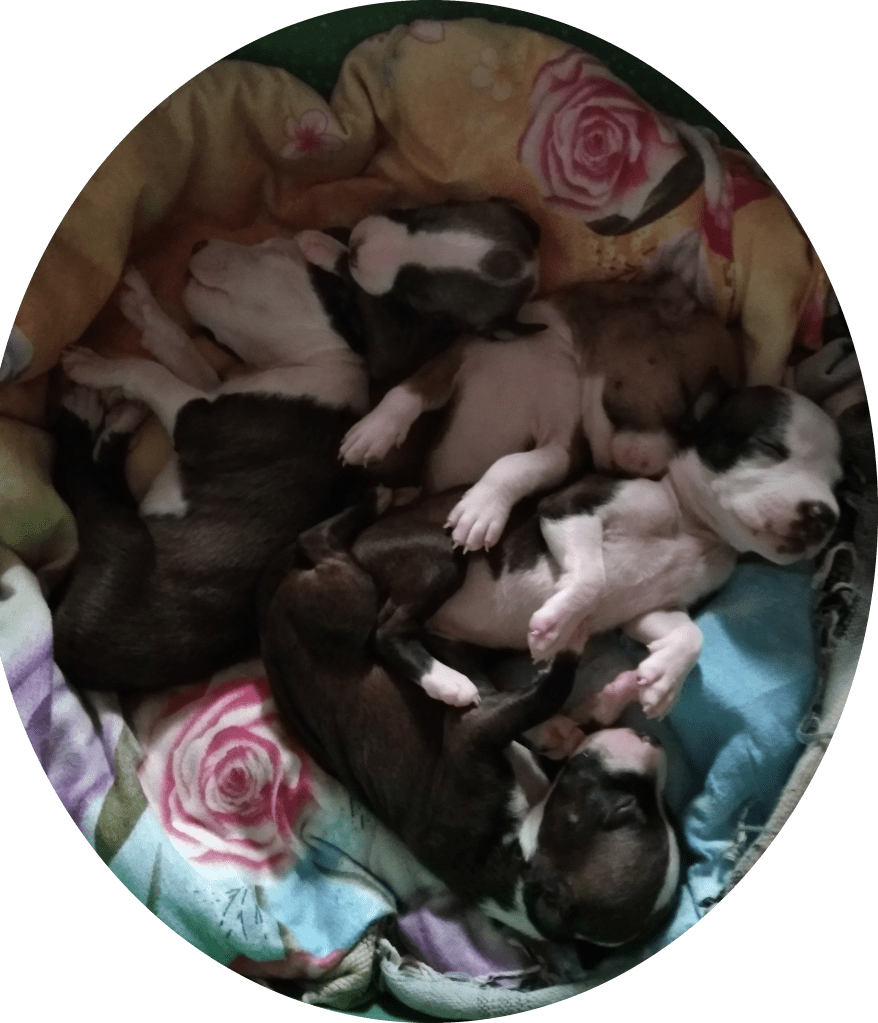
The fierce five that came through. 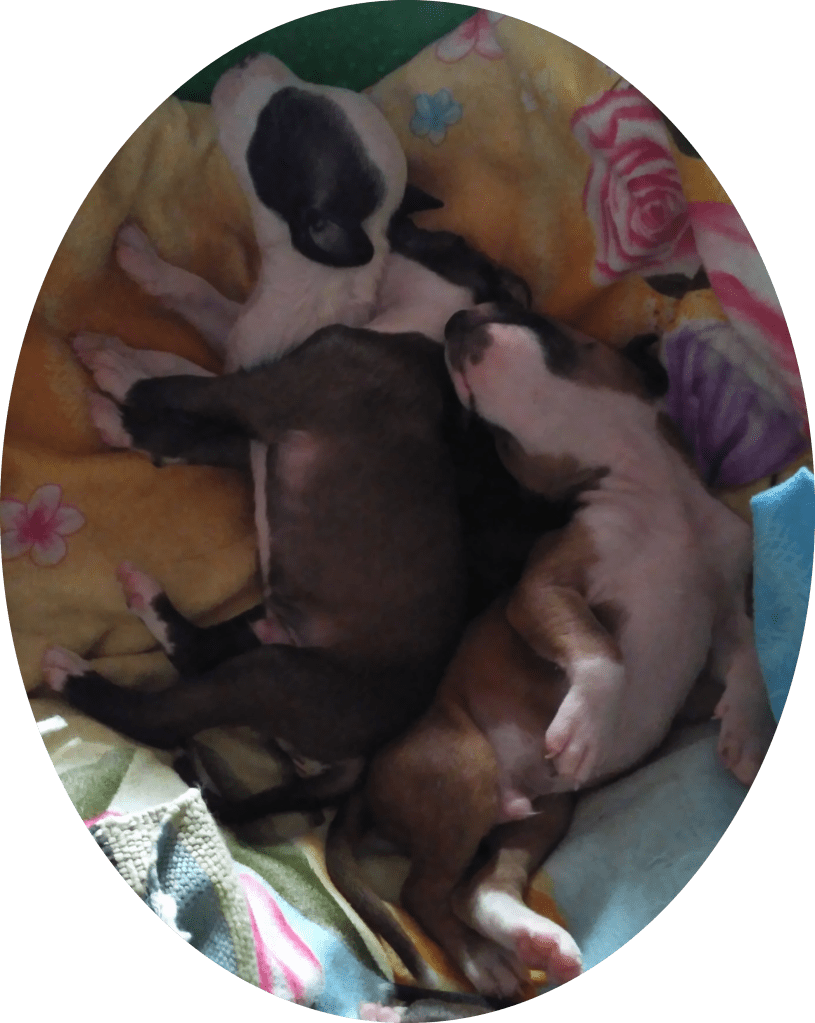
no.1 and no. 2 together 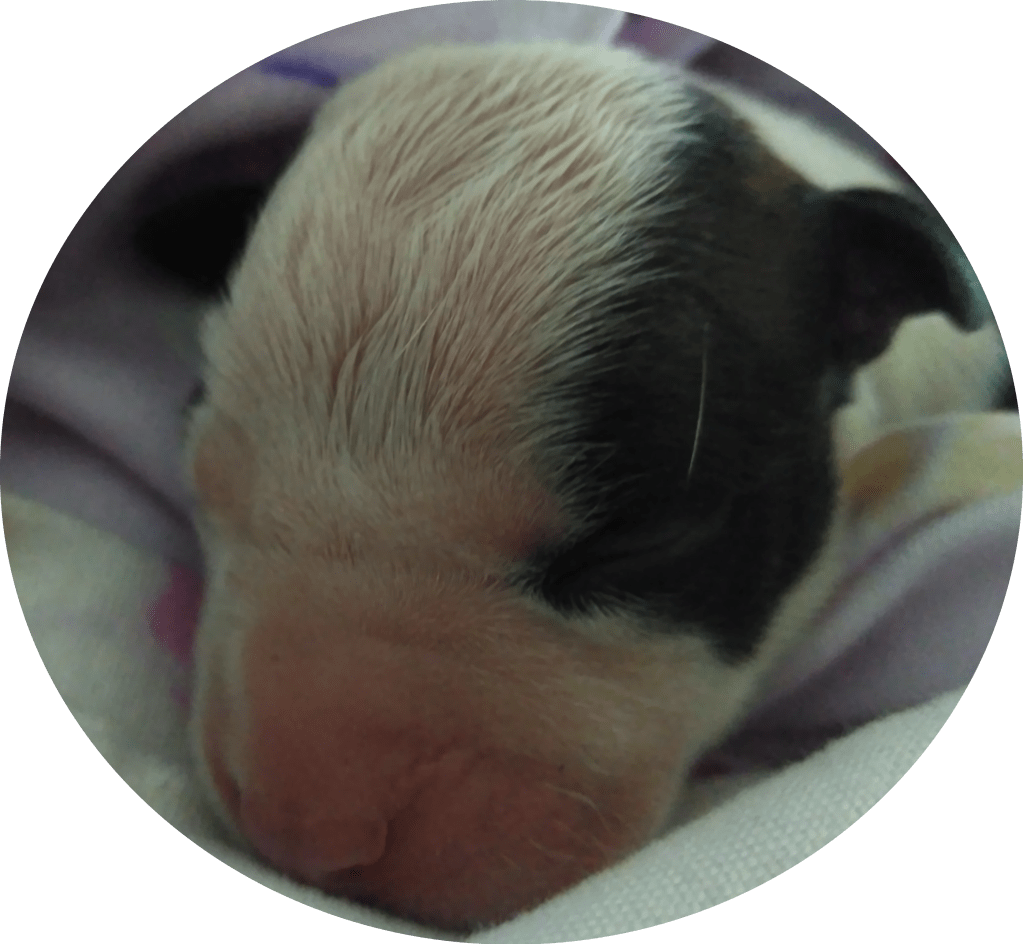
the handsomest, no.2 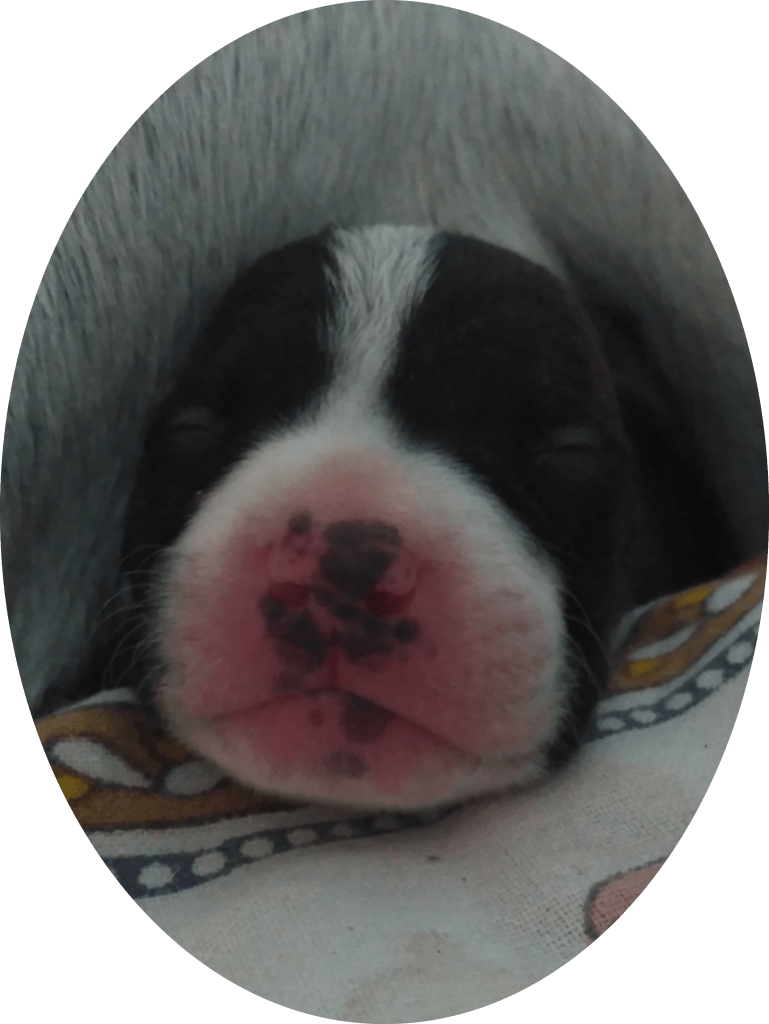
The weakest, fiercest and bravest, and my favourite. 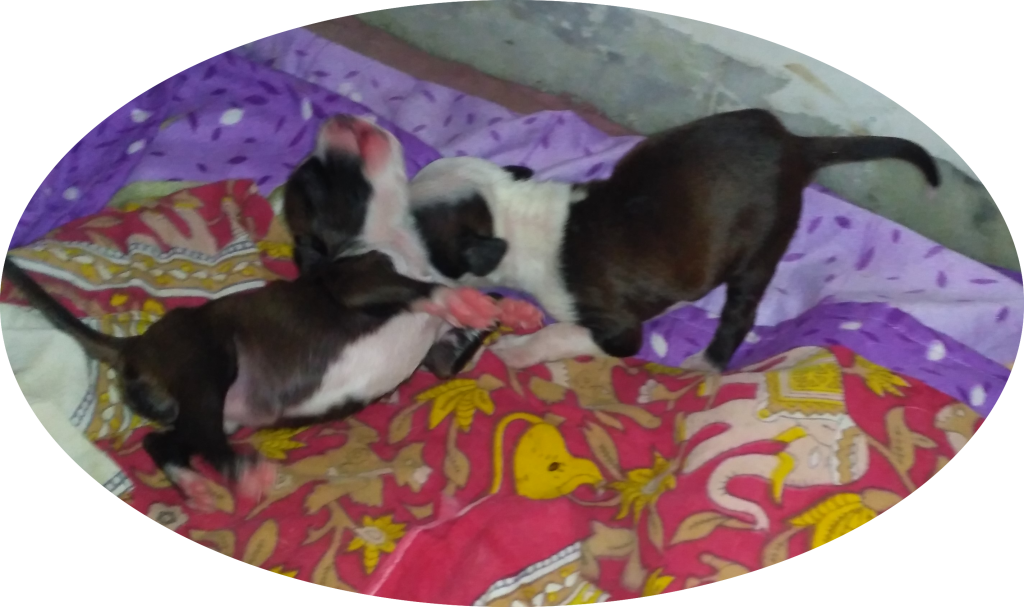
The girls playing together 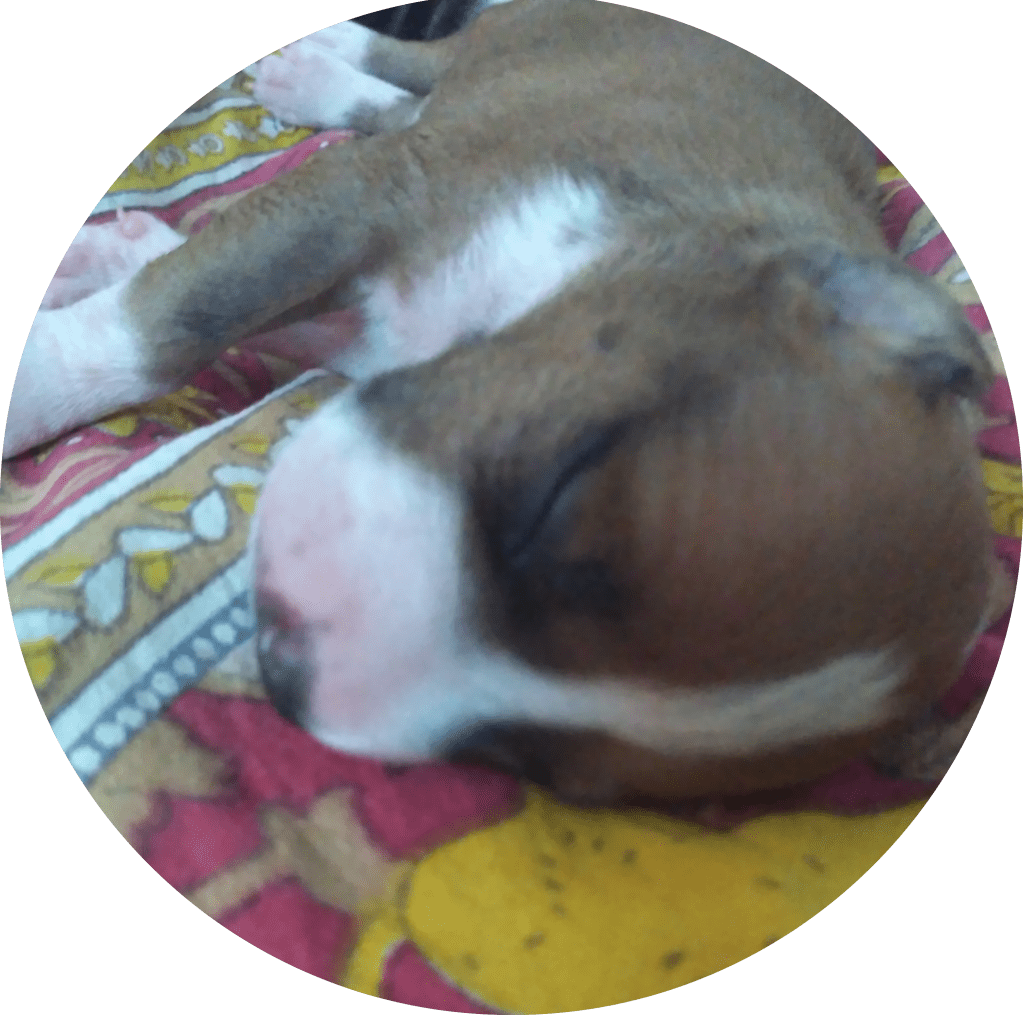
the strongest, no.1 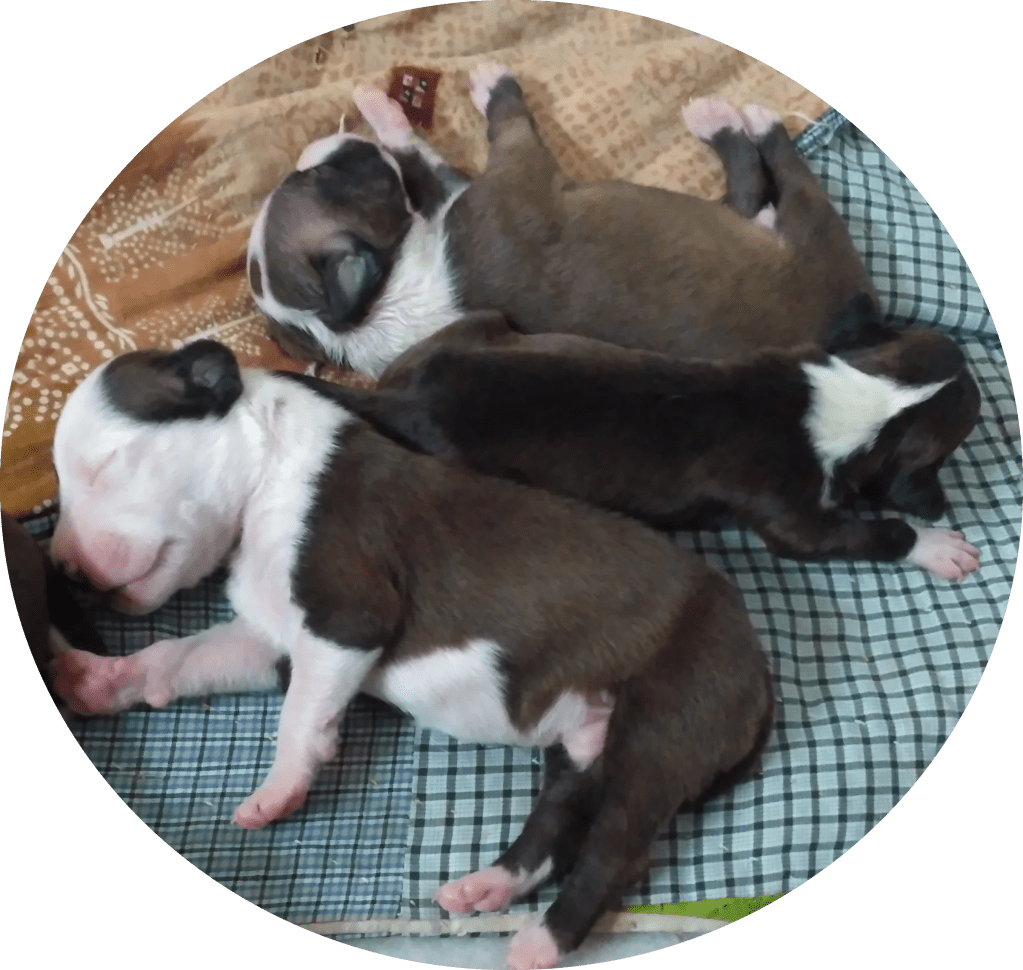
The boys, sleeping away the day.
The delivery was complicated though, after delivering 3 puppies naturally, the fourth one took abnormally long, and was his heart didn’t start beating after. So we took her for an emergency C section along with the 3 pups and after the operation, came four more pups out of which the last two females to be born were too weak to survive, so they died after 10 minutes of being born. They were barely 3-4 inches and weighed too little. Hence we came home with 5 puppies in total. Everything was going smoothly thereafter. But after 10 days of operation, Pepper ripped her stitches when the protective collar was taken off to clean her and we had to take her to the vet to get them checked and fixed as they had swollen and were secreting pus-like liquid. That was when the early symptoms started.
Just after 5 days of visiting the vet, I remember noticing her eyes being very wet and in two more days a slight cough developed which I ignored thinking that she must’ve eaten some toy or mud as she did when not dewormed for more than 3 months. By then the pups were around 17 days old. That’s when Pepper’s feed started reducing to almost none. Puppies would not get a full 1-time meal from her and had to be given puppy formula every time. Also, the cough increased and there was reverse sneezing as well. She had watery eyes, dry nose, reduced feed, cough, reverse sneezing within 7 to 8 days of visiting the vet for stitches. One more very important sign that I very stupidly ignored was that her post-delivery vaginal discharge had stopped within 10-12 days which was very early even for her size, she weighed 55 pounds during that timeline.
After the reverse sneezing appeared she started having excessive saliva discharge. That’s when we took her for a vet examination. After a blood test and some examination, the vet told us that it is a stomach infection and that antibiotics will heal her soon. But the antibiotics did nothing and within 2 days of the visit to the vet, every symptom increased by 50% and the saliva discharge became continuous, and we took her again to the vet. By this time the puppies were anywhere around 20-22 days old. Their eyes were fully open and they could walk and jump comfortably while playing. In the second visit, the vet confirmed that it was distemper indeed and that Pepper was in a bad shape and had very little chance considering she had just given birth through an operation and was not in her full health and also because the infection had increased a lot.
After that visit, it was just a matter of days. We tried all kinds of medications for Pepper and for the puppies. They were kept separately, even though we knew that they had contracted the virus from her already. We could see the liquid pus discharge starting in their eyes too. From allopathy to homeopathy to herbal oils, we tried everything. We tried putting them on IVs, daily got the pups nebulized as their nose and lungs clearly sounded massively choked with mucous. They were showing symptoms of pneumonia. In 3 days, their appetite plunged. Pepper had developed a constant shiver in her jaw, her nose was dry, and had developed a thick, hard and crusty layer on it so did the pads of her feet. On the fourth day, the pups were hardly eating anything, I force-fed them ORS(Oral Rehydration Solution) and puppy formula alternatively, using a syringe but still, they got severely dehydrated. Not even the IV worked. When the pups turned 25 days old, I remember, the weakest pup of the lot started having bloody discharge from her nose. She had severe pneumonia. She had been so weak that she wasn’t even able to suck the milk from her mother and had to be fed separately from the beginning. On that day, her breath stopped 5 times, for 5 times she closed her eyes as if she was dead but came back fighting for her life every time. After 5 hours of intensive care and almost constant CPR, she gave up the fight, closed her little eyes forever, to finally rest in peace. After she died, Pepper developed fits. She was having seizures at least 3 times a day which lasted for several minutes. The oral discharge was like a constant sticky, slimy waterfall. Uncontrollable.
The second day after that, two of the strongest of the litter, the firstborn and the second, were straight away having fits. They survived the first 3 fits but couldn’t survive the fourth one. The same day, 2 hours after Pepper got home from being nebulized and getting a sleeping shot from the vet, she died in her sleep, leaving her 2 little remaining puppies with us to save somehow. They both now had a fever, discharge from eyes and nose, and no appetite. I was determined to give them all the support that I could to try and save them, to keep at least one of them alive, to have something of Pepper still alive. I was not ready to lose all of her, so fast, in such a way. And so I started trying. Every 2 hours I gave the pups some ORS (Oral Rehydration Solution) and puppy formula alternatively, I tried to get at least 5 ml of it in them but even if 3 ml went in it worked. If they choked on that same water during feeding or on their own mucous, nasal flush had to be performed within a matter of seconds. All this went on for 3 days and nights. Continuously. No sleep, no rest. On the day the pups were 29 days old, they both died within hours of each other.
It’s a shame that Pepper got the disease from the place least expected to get it from, from the vet’s clinic itself. The timing was such that her immune system was compromised and her health was already not 100% because of the whelping. Her death and the way her puppies died fighting to breathe a single easy breath was really heart wrenching. This all happened in 2018 and it has taken me 2 years to be able to write about it with stable hands and thoughts. In the end, no amount of money or medicine could help them as much as their own immune system, their own good health could’ve. The puppies were too small to stand a chance, to begin with, and Pepper’s health was compromised enough to make her immune system totally vulnerable.
It cost me 6 dogs and a lot of heartbreak to learn about distemper, its early signs and symptoms, and its preventions. I know there are many other pet lovers who must’ve been through the same. I have been very vigilant with the 10 in 1 (Distemper, Parvo, and other virus preventive shots) of my other dogs, and I no longer have the urge to have my dogs mate and reproduce so their blood-line remains in my family. For however long they live with us, I just want to see them live to the fullest, a happy, healthy, and disease-free life. Even if it means no offsprings to remember them by.

 Loud Thoughts